07 September 2020

Wealth Gap Series


This series explores the widening Wealth Gap and its impact on class and race relations, excerpting heavily from Thomas Piketty, Professor at the Paris School of Economics, who has explored the structural cause of the wealth gap in his book Capital in the Twenty-First Century published in 2014. He created quite a stir, getting both rave reviews and harsh critiques. He brought the issue of a widening wealth gap to the limelight and has shown how war mitigated extreme wealth gaps in the past. And without a discussion and resolution, war may again mitigate the current wealth gap extreme. And now, Covid-19 has made wealth inequality impossible to ignore. That is not just wealth inequality, but inequality of access to healthcare. 

Capital in the Twenty-First Century by Thomas Piketty, Professor Paris School of Economics, 2014, Excerpts
The central thesis of this book is that a small gap between the return on capital and the rate of income growth can in the long run have powerful and destabilizing effects on the structure and dynamics of social inequality.

The concentration of wealth and prospects for economic growth lie at the heart of political economy. The main driver of inequality – the tendency of returns on capital to exceed the rate of income growth – generates extreme inequalities that stir discontent and undermine democratic values.

There is no fundamental reason why we should believe that growth is automatically balanced. We should put the question of inequality back at the center of economic analysis and begin asking questions first raised in the nineteenth century. For far too long, economists have neglected the distribution of wealth.


Thomas Piketty refuses to censor latest book for sale in China
https://www.theguardian.com/books/2020/aug/31/thomas-piketty-refuses-to-censor-latest-book-for-sale-in-china
31 Aug 2020
The latest book by the French economist Thomas Piketty appears unlikely to be sold in mainland China after he refused requests to censor it. The Chinese president, Xi Jinping, has expressed admiration for Piketty’s work, but Capital and Ideology, which was published last year, has not made it to the mainland China market due to sections on inequality in the country. “They basically wanted to cut almost all parts referring to contemporary China, and in particular to inequality and opacity in China,” he said.

Xi has previously referenced Piketty’s work, including his book Capital in the Twenty-First Century. As recently as this month, Xi wrote in an essay that Piketty’s work on US inequality was “worthy of our consideration”. Piketty writes that China’s wealth distribution to the top 10% and bottom 50% is “only slightly less inegalitarian than the United States and significantly more so than Europe”.


The coronavirus crisis has exposed the ugly truth about celebrity culture and capitalism
31 Mar 2020
The rich and famous are desperate to prove we are all in this together – in fact, the outbreak has highlighted just how false that is. While this is a difficult time for everyone, it has been particularly tough on the famous. They have been upstaged by a virus. No one cares what they are wearing or who they are snogging anymore; the world’s attention has been diverted by a headline-hogging pandemic. It seems as if some celebrities are starting to grapple with the realization that they are not quite as important or beloved as they thought they were.

Gal Gadot was the first victim of the great celebrity backlash of 2020. “We’re all in this together,” the Wonder Woman star assured us in a video on Instagram a couple of weeks ago, before launching into a star-studded rendition of John Lennon’s Imagine. Can you imagine how little self-awareness you must have to enlist a bunch of multimillionaires to sing about a world with “no possessions” while huge numbers of people are losing their jobs?

Coronavirus has made inequality impossible to ignore. That is not just wealth inequality, but inequality of access to healthcare. A new famous person seems to test positive for coronavirus every day while exhibiting mild symptoms at best. Meanwhile, our friends and family can be coughing up their lungs and still not get access to a test or a hospital bed.

Celebrity culture and capitalism are inextricably entwined. Both elevate the individual over the collective good. They rely on the lie of “meritocracy”: work hard and you can achieve whatever you want. But it has become uncomfortably clear how little we value our hardest workers – the healthcare professionals, supermarket staff, bus drivers and delivery drivers who are keeping the world running while the rich run to their second homes. And it has never been so clear how little the people who earn the most contribute to society. “We’re all in this together,” the rich and famous keep telling us. Sorry, but it is obvious that we are not.

Ultra-rich protect wealth with spread of 'family offices'
16 Mar 2017
The ultra-rich in London are increasingly protecting their wealth through the use of "family offices", says research from the London School of Economics. These are teams of professionals - such as lawyers, financiers and psychologists - employed to ensure the "dynastic wealth" of the super-rich, they support a "bunkered" and "fortified" way of life of the "global super-rich". The growth of extreme wealth, alongside poverty and low-income families, means that there needs to be more analysis of how such wealth is perpetuated, the study suggests.

Obama’s Farewell Address, Excerpts
10 Jan 2017
Our democracy won’t work without a sense that everyone has economic opportunity. Our economy doesn’t work as well or grow as fast when a few prosper at the expense of a growing middle class, and ladders for folks who want to get into the middle class.

Stark inequality is corrosive to our democratic idea. While the top 1 percent has amassed a bigger share of wealth and income, too many of our families in inner cities and in rural counties have been left behind. Convinced that the game is fixed against them. That their government only serves the interest of the powerful. That’s a recipe for more cynicism and polarization in our politics.

If every economic issue is framed as a struggle between a hardworking white middle class and an undeserving minority, then workers of all shades are going to be left fighting for scraps while the wealthy withdraw further into their private enclaves.

Britain's inequality map - stark and growing
02 Dec 2016
Andy Haldane, the Bank of England's chief economist is not only worried about the inequality of those on the lowest incomes versus the very rich, but also with those regions which have fallen behind in the race for economic growth since the financial crisis. Most concerning for a government which has pledged to make the economy work "for all" - which presumably means across geographies as well as income bands - is that the issue is becoming more acute.

UK one of the most unequal countries, says Oxfam
13 Sep 2016
The richest 1% of the UK population owns more than 20 times the wealth of the poorest fifth, according to Oxfam. That made Britain one of the most unequal countries in the developed world and contributed to the vote for Brexit, the charity said. The report said many people in the UK felt locked out of politics and economic opportunity. Rachael Orr, head of Oxfam's UK Program, said: "Inequality is a massive barrier to tackling poverty and has created an economy that clearly isn't working for everyone."

Wealth Over Work
23 Mar 2014
It seems safe to say that “Capital in the Twenty-First Century,” the magnum opus of the French economist Thomas Piketty, will be the most important economics book of the year — and maybe of the decade. Mr. Piketty, arguably the world’s leading expert on income and wealth inequality, does more than document the growing concentration of income in the hands of a small economic elite. He also makes a powerful case that we’re on the way back to “patrimonial capitalism,” in which the commanding heights of the economy are dominated not just by wealth, but also by inherited wealth, in which birth matters more than effort and talent.


Wikipedia: Wealth inequality in the United States
The rich are accumulating more assets while the middle and working classes are just getting by. Currently, the richest 1% hold about 38% of all privately held wealth in the United States while the bottom 90% held 73% of all debt. According to the New York Times, the "richest 1 percent in the United States now own more wealth than the bottom 90 percent".

The distributive nature of tax policy has been suggested by some economists and politicians such as Emmanuel Saez, Thomas Piketty, and Barack Obama to perpetuate economic inequality in America by steering large sums of wealth into the hands of the wealthiest Americans. This claim has created much controversy and debate within the academic and political spheres.

Racial disparities: There are many causes, but inheritance might be the most important. Inheritance can directly link the disadvantaged economic position and prospects of today's blacks to the disadvantaged positions of their parents' and grandparents' generations.

In Capital in the Twenty-First Century, French economist Thomas Piketty argues that "extremely high levels" of wealth inequality are "incompatible with the meritocratic values and principles of social justice fundamental to modern democratic societies" and that "the risk of a drift towards oligarchy is real and gives little reason for optimism about where the United States is headed.


22 July 2020

The Power Elite Series


The Power Elite by C. Wright Mills, 1956, Excerpts
In American society, major national power now resides in the economic, the political, and the military domains. Other institutions are duly subordinated to these. Within each of the big three, the typical institutional unit has become enlarged, has become administrative, and, in the power of its decisions, has become centralized. The power elite is not an aristocracy, which is to say that it is not a political ruling group based upon a nobility of hereditary origin.

The power elite is composed of men whose positions enable them to transcend the ordinary environments of ordinary men and women; they are in positions to make decisions having major consequences. Whether they do or do not make such decisions is less important than the fact they do occupy such pivotal positions: their failure to act, their failure to make decisions, is itself an act that is often of greater consequences than the decisions they do make. For they are in command of the major hierarchies and organizations of modern society. They rule the big corporations. They run the machinery of the state and claim its prerogatives. They direct the military establishment. They occupy the strategic command posts of the social structure, in which are now centered the effective means of the power and the wealth and the celebrity which they enjoy.

The life-fate of the modern individual depends not only upon the family into which he was born or which he enters by marriage, but increasingly upon the corporation in which he spends the most alert hours of his best years; not only upon the school where he is educated as a child and adolescent, but also upon the state which touches him throughout his life; not only upon the church in which on occasion he hears the word of God, but also upon the army in which he is disciplined.


Brave New World by Aldous Huxley


14 July 2020

Chatty Kathy


I was talking to a younger co-worker and mentioned that a friend of mine who when had a couple beers became a Chatty Kathy. Though he laughed, in retrospect, I wondered if he actually knew what I meant by ‘Chatty Kathy’ considering that it’s a dated phrase.

Chatty Cathy was a pull string "talking" doll manufactured by the Mattel toy company from 1959 to 1965. Chatty Cathy was on the market for six years and was the second most popular doll of the 1960s after Barbie. The doll had eleven phrases when it came on the market in 1960 such as "I love you", "I hurt myself!" or "Please take me with you." Seven more phrases such as, "Let's play school" or "May I have a cookie?" were added to the doll's repertoire in 1963 for a total of 18 phrases. The term "Chatty Cathy" can be used to refer to a particularly talkative person.

I had two older sisters while growing up in the sixties, and our household had a Chatty Kathy doll. A child will share their most intimate thoughts and emotions with a doll. A doll that could say phrases appealing to a child became immortalized in the culture as a saying ‘Chatty Kathy’.

Which made me wonder, what are today’s techno dolls like where a child shares their most intimate thoughts and emotions? I suspect they would be interactive dolls where every interaction is uploaded into big data, processed, evaluated, compared, trended, and forecasted to the point where AI could know the sexual orientation of the child before the child or parents knew, building a complete psychological profile of the child to be sold and capitalized upon.

Is there such a doll? If not, there will be.


Propaganda and advertising have always been designed to appeal to unacknowledged fears and yearnings. This is not the first time that the unconscious mind has been targeted as an instrument of others’ aims. These have relied more on art than science, using gross data or professional intuition for the purpose of mass communication. Those operations cannot be compared to the scientific application of today’s historic computational power to the micro-measured, continuous rendition of your more-or-less actual feelings.

Surveillance capitalists declare their right to modify others’ behavior for profit according to methods that bypass human awareness, individual decision rights, and the entire complex of self-regulatory processes that we summarize with terms such as autonomy and self-determination. The new toolmakers do not intend to rob you of your inner life, only to surveil and exploit it. All they ask is to know more about you than you know about yourself.

At no other time in history have private corporations of unprecedented wealth and power enjoyed the free exercise of economies of action supported by a pervasive global architecture of ubiquitous computational knowledge and control constructed and maintained by all the advanced scientific know-how that money can buy.

Under surveillance capitalism, the means of production serves the means of behavioral modification. Machine processes replace human relationships so that certainty can replace trust.


04 May 2020

Dear Lender/Landord


Dear Lender/Landlord:

Our household has not been immune from this 'economy thing' and, as a result, our mortgage/rent check will be somewhat delayed. Our financial resources have finally dwindled to the point where our ability to make payment is affected. Our living expenses have been cut back to the basics and we're still cash short to cover the mortgage/rent payment, which is our largest expense next to taxes. We will resume paying the mortgage/rent when our financial situation improves. We are not immune from the greater economic forces, and we will not suffer disproportionately.

You may decide to proceed with eviction. Before doing so, you should know that we consider the dwelling our home and home is very important to us. Since those events that control the economy are way beyond our control, we don't plan to suffer disproportionately for something that's not entirely our fault, and since there is no safe haven from this 'economic thing', we prefer to stay in our home until whenever. You have the power to initiate or to not initiate the use of legal force that will be required to remove us from our home. Should you initiate the use of force or harassment, at whatever level, you will share proportionately. The level of escalation is your call.

Please don't take this personally, these are just business risks that the lender/landlord must have, or should have, considered when investing in people's homes.

There's no place like home.

Sincerely yours,

Debtor/Renter


Pretty Boy Floyd by Woodie Guthrie
Yes, there’s many a starving farmer
The same story told
How the outlaw paid their mortgage
And saved their home.
Some rob you with a six gun
Some with a fountain pen

Don Corleone, the Godfather, speaking to Sonny:
“Don’t you want to become a lawyer? Lawyers can steal more money with a briefcase than a thousand men with guns and masks.”

Confessions of an Economic Hit Man by John Perkins, 2004
Mafia bosses often start out as street thugs. But over time, the ones who make it to the top transform their appearance. They take to wearing impeccably tailored suits, owning legitimate businesses, and wrapping themselves in the cloak of upstanding society. They support local charities and are respected by their communities. These men appear to be model citizens. However, beneath this patina is a trail of blood. When the debtors cannot pay, hit men move in to demand their pound of flesh. If this is not granted, the jackals close in with baseball bats, Finally, as a last resort, out come the guns.


Articles:


Thousands of Americans to take part in biggest rent strike in decades
01 May 2020
Activists in New York, Pennsylvania and California are encouraging tenants to withhold rent, whether they are able to pay or not, to draw attention to the plight of those unable to pay. More than 30 million Americans have filed for unemployment benefits in the past six weeks, as the coronavirus has caused widespread business closures. The New York congresswoman Alexandria Ocasio-Cortez is among those voicing support for the strikes. “People aren’t striking because they don’t feel like paying rent, they’re striking because they can’t,” Ocasio-Cortez said. Like Cuomo, Governor Gavin Newsom of California has barred evictions due to coronavirus hardship but stopped short of waiving individuals’ rent payments. If the estimates prove accurate, the rent strike would be the largest there since the 1930s.

Majority of Americans Support Canceling Rent and Suspending Mortgage Payments During Pandemic
18 Apr 2020
Data for Progress found that 55% of all voters somewhat or strongly support a policy that would suspend mortgage payments and cancel rent payments, and not require renters to pay rent that accumulated during the pandemic, results that bolster the argument for legislation introduced Friday by Rep. Ilhan Omar. "With millions of renters in a desperate situation, bold legislation to relieve renters is imperative. Eviction moratoriums—which postpone rent payments, but don't cancel them—are only a first step, but they are not enough." Before the COVID-19 pandemic, a Harvard University report found that nearly half of renters in the U.S. are "cost-burdened," spending more than 30% of their income on housing, and a quarter of renters are "severely cost-burdened," meaning they spend more than half of their income to make the rent. The pandemic has exacerbated America's housing crisis, leaving millions of renters in desperate circumstances and in dire need of bold legislation that goes beyond eviction moratoriums.

Spain suspends house evictions for two years
http://www.bbc.co.uk/news/business-20299384
12 Nov 2012
An estimated 350,000 families have been evicted from their homes since Spain's property market crashed in 2008, at the beginning of the economic crisis. The announcement comes three days after a woman in northern Spain took her own life, just before she was due to be evicted from her home. A 53-year-old woman jumped out of her fourth-floor flat on Friday as local officials arrived to evict her from her home. Another man in the city of Granada, whose house was also due to be repossessed, apparently committed suicide last month. There have been demonstrations in Spain, with an organization called Platform for Mortgage Victims blocking access to houses to prevent evictions.

Suicide rates in Europe 'linked' to financial crisis
07 Jul 2011
The financial crisis "almost certainly" led to an increase in suicides across Europe, health experts say. The analysis by US and UK researchers found a rise in suicides was recorded among working age people from 2007 to 2009 in nine of the 10 nations studied. Finland fared best while Greece had the worst record. The UK saw a rise of 10% to 6.75 suicides per 100,000 people. Dr David Stuckler, one of the researchers, said: " Almost certainly these rises are linked to the financial crisis." And he added it was also possible there would be other health consequences from the economic problems as the impact on heart disease and cancer rates was not likely to be seen for many years. Prescriptions for drugs such as Prozac rose by more than 40% over the past four years with GPs saying more and more people were coming to them with money worries. Andy Bell, deputy chief executive of the Centre for Mental Health, said: "We know that unemployment and the fear of unemployment are major risk factors for poor mental health. This research shows how important it is that we treat the mental health of people who are not just out of work but also in work but fear losing their jobs as a major public health issue".

US banks 'foreclosed on record 1m homes in 2010'
13 Jan 2011
Banks repossessed a record one million US homes in 2010, and could surpass that number this year, figures show. Among the worst hit states were Nevada, Arizona, Florida and California, once at the heart of the housing boom. Nevada had the highest foreclosure rate for the fourth year in a row, with one in 11 housing units receiving a foreclosure notice, and RealtyTrac said more than half the nation's foreclosures occurred in Arizona, California, Florida, Illinois and Michigan. "2011 is going to be the peak," senior vice-president Rick Sharga told the Associated Press news agency. Foreclosures slowed toward the end of 2010 amid revelations that banks had based the proceedings on improper documentation, but the pace is likely to rebound in the first quarter of 2011, Mr Sharga said.

Bank of America restarts home repossessions
18 Oct 2010
Bank of America - the biggest bank in the US - has said it will restart legal proceedings to repossess 102,000 homes. The lender had stopped its foreclosure process earlier this month after it emerged that thousands of cases may have been mishandled. The bank said it would restart proceedings in 23 states.

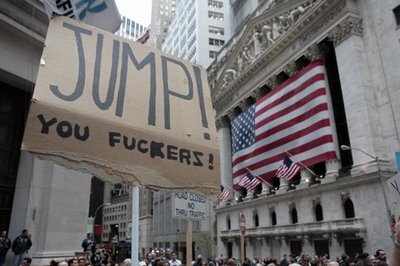
Facing Foreclosure? Don't Leave. Squat
04 Feb 2009
Marcy Kaptur of Ohio is the longest-serving Democratic congresswoman in U.S. history. Her district, stretching along the shore of Lake Erie from west of Cleveland to Toledo, faces an epidemic of home foreclosures and 11.5 percent unemployment. She criticizes the bailout's failure to protect homeowners facing foreclosure. Her advice to "squat" cleverly exploits a legal technicality within the subprime-mortgage crisis. These mortgages were made, then bundled into securities and sold and resold repeatedly, by the very Wall Street banks that are now benefiting from TARP (the Troubled Asset Relief Program). The banks foreclosing on families very often can't locate the actual loan note that binds the homeowner to the bad loan. "Produce the note," Kaptur recommends those facing foreclosure demands of the banks.

Meltdown Madness: The Human Costs of the Economic Crisis
29 Jan 2009
The body count is still rising. For months on end, marked by bankruptcies, foreclosures, evictions, and layoffs, the economic meltdown has taken a heavy toll on Americans. In response, a range of extreme acts including suicide, self-inflicted injury, murder, and arson have hit the local news. It's mostly on Main Street, not Wall Street, that people are being driven to once unthinkable extremes. And while it's always impossible to know the myriad factors, including deeply personal ones that contribute to drastic acts, violent or otherwise, many of those recently reported are undoubtedly tied, at least in part, to the way the bottom seems to be falling out of the economy. As a result, reports of people driven to anything from armed robbery to financially-motivated suicide in response to new fiscal realities continue to bubble to the surface. And since only a certain percentage of such acts receive media coverage, the drumbeat of what is being reported definitely qualifies as startling.

With no job and 5 kids, 'better to end our lives,' man wrote
28 Jan 2009
It was described as one of the most grisly scenes Los Angeles police had ever encountered: the bodies of five small children and their parents, all shot to death, in two upstairs rooms of the family's home.

The Rising Body Count on Main Street
20 Oct 2008
Suicide is just one type of extreme act for which the financial meltdown has seemingly been the catalyst. Since the beginning of the year, stories of resistance to eviction, armed self-defense, canicide, arson, self-inflicted injury, murder, as well as suicide, especially in response to the foreclosure crisis, have bubbled up into the local news, although most reports have gone unnoticed nationally -- as has any pattern to these events. Troubling trends are to be expected in the years ahead, especially as hundreds of thousands of veterans of the Iraq and Afghan Wars, their families often already under enormous stress, are coming home to scenarios of joblessness and, in some cases, hopelessness.

Bush: No Bailout for Pinched Homeowners
09 Aug 2007
President Bush said Thursday concern should be shown those who've lost their homes but it's not the federal government's job to bail them out. "Obviously anybody who loses their home is somebody with whom we must show an enormous empathy," Bush said. Asked whether he would champion a government bailout? Bush responded: "If you mean direct grants to homeowners, the answer would be `No, I don't support that.'"

Foreclosure Rates Still Soaring
15 May 2007
Foreclosures continue to trouble real estate markets nationwide, with filings in April up 65 percent from a year earlier, according to a report released Tuesday. Six out of the 10 hardest hit cities were in California with Stockton registering the nation's highest rate, 1 foreclosure filing for every 131 households. Other California cities in the top 10 included No. 2 Vallejo-Fairfield and No. 4 Riverside-San Bernardino.

The Ugly Face of Foreclosure
07 May 2007
Foreclosures are devastating communities across the United States, and the impact may only worsen as more subprime adjustable mortgages reset during the next few months. The vacancies look bad enough, but it's what happens next that really hurts. "The bad people in a community find out right away when a house has been foreclosed on," said Hayden. "They come in and steal the copper plumbing. I've even seen them strip the aluminum siding off to sell. The houses become havens for drug dealers." Fighting those problems off, stabilizing the community and redeveloping blighted areas are a challenge for cash-starved municipalities. And they have less money to pay for it because foreclosures cause tax collections to suffer. Not only do foreclosures, abandonment and demolition take properties off the tax rolls; the remaining homeowners often want their assessments lowered and taxes cut to reflect their plummeting property values.

05 April 2020

The Circumcision of Saint Simon Trent


Circumcision by David Gollaher, 2000, Excerpts
Circumcision was a leitmotif in the stories of Christian boys martyred by Jewish fiends who, in the case of Anderl von Rinn [1462], collected the child’s blood in a bowl and used it to make Passover matzohs. The archetypal expression of the atrocity appeared in the late fifteenth-century woodcut illustrating the murder of Saint Simon of Trent [1475]. The prototypal image of Saint Simon’s martyrdom, published in Hartmann Schedel’s Nuremberg Chronicle, portrays Jews circumcising the two-year-old while they bleed him to death, purportedly saving his blood for use in their Passover ritual.

Claudine Fabre-Vassas, a French ethnologist, describes the engraving that depicts the martyrdom: “The emphasis is placed on the treatment of St. Simon’s genitals, which are being cut with a large knife. A gaping wound is opened at his throat, from which the blood is flowing into a receptacle. Shearing scissors are ready to cut into this chest and needles pricking his skin contribute to bleeding him white.”


IItalian artist accused of antisemitism for new painting of blood libel
27 Mar 2020
An Italian artist renowned for his baroque-style paintings filled with Christian imagery was met with controversy after unveiling his latest painting of the martyrdom of St. Simon of Trento, which is a depiction of Jews ritualistically murdering a Christian child. Painter Giovanni Gasparo uploaded a picture of his canvas to his Facebook page on Tuesday titled Martirio di San Simonino da Trento (The Martyrdom of St. Simon of Trento). The painting is very detailed, showing a group of hook-nosed Jews with peyot and yellow, uneven teeth strangling the child and draining his blood. Some of the Jews are also shown wearing kippot and shtreimels, with one in the center wearing a tallit over his head and shoulders. In addition, the child is shown with its arms outstretched, reminiscent of Jesus Christ on the cross as the Jews look on with apparent sadistic joy. The event depicted in the painting has some historical basis. A two-year-old child in the city of Trento named Simon went missing in March 1475. Historical accounts are divided on where exactly the body was found, but a prevailing rumor at the time was that it was found in the cellar of a Jewish man named Samuel.

The Professor Toaff Controversy
MKs demand the author of blood libel book be prosecuted
26 Feb 2007
MKs on Monday demanded that the state examine ways in which it could prosecute Professor Ariel Toaff, who wrote book "Pasque di Sangue" [Passovers of Blood], which discusses the possible facts behind 15th century European blood libels against Jews. In his book, Toaff discusses at length the possibility that Jews murdered Christian children to use their blood in religious rituals, and argues that confessions to such acts extracted under torture should not be dismissed. Toaff uses as an example the blood libel of Trent in 1475, and suggests that Jews did murder the young child, Simon, who is at the center of the affair.

Scholar Pulls Book Revisiting Blood Libel
16 Feb 2007
After unleashing a torrent of criticism both in his native Italy and around the globe, an Israeli professor has ordered his publisher to halt distribution of a new book that suggests a possible historical basis for the centuries-old charge that Jews murdered Christians and used their blood for ritual purposes. Ariel Toaff, a professor of medieval and Renaissance history at Israel’s Bar Ilan University, said in a February 14 statement that, while he stands by his research, he is recalling the book, “Pasque di Sangue” (“Bloody Passovers”), in order to reframe those sections of it that he feels have been misunderstood by readers and mischaracterized in the press.

Bar-Ilan professor who claimed Jews used Christian blood in Passover ceremonies defends his book: 'I will fight for my truth, even if I am crucified'
12 Feb 2007
In an interview with Haaretz from Rome, Professor Ariel Toaff said he stood behind the contention of his book, "Pasque di Sangue," just published in Italy, that there is a factual basis for some of the medieval blood libels against the Jews. However, he said he was sorry his arguments had been twisted. Toaff said he reached his conclusions after coming across testimony from the trial for the murder of a Christian child, Simon of Trento, in 1475, which in the past was believed to have been falsified. "I found there were statements and parts of the testimony that were not part of the Christian culture of the judges, and they could not have been invented or added by them. They were components appearing in prayers known from the [Jewish] prayer book.

Professor outrages Jews with book claim
09 Feb 2007
A Jewish academic has shocked Italy by claiming Jews murdered Christians for their blood in the Middle Ages so it could be used in rituals. The details were revealed in the Italian newspaper, the Corriere della Sera, which published extracts of the book, Easter of Blood by Professor Ariel Toaff. The book describes the mutilation and crucifixion of a two-year-old boy to recreate Christ’s execution at Pesach, the Jewish Easter. The festival marks the fleeing of the Jews from Egypt and Prof Toaff says Christian blood was used for "magic and therapeutic practices". In some cases the blood was mixed with dough to make azzimo, unleavened bread, eaten at Pesach. He says the acts took place in around the city of Trento in modern northern Italy, between the 11th and 14th centuries.


24 March 2020

The Bewildered Herd


Media Control by Noam Chomsky, 2002, Excerpts

Walter Lippmann argued that in a properly functioning democracy there are classes of citizens. There is first of all the class of citizens who take an active role in running general affairs. That’s the specialized class. They carry out the executive function; they do the thinking and planning and understand the common interests. They are the people who analyze, execute, make decisions, and run things in the political, economic, and ideological systems. That’s a small percentage of the population.

Those others are what Lippmann called “the bewildered herd.” Their function in a democracy, he said, is to be “spectators,” not participants in action. Occasionally they are allowed to lend their weight to one or another member of the specialized class. That’s called an election. But once they’ve lent their weight to one or another member of the specialized class they’re supposed to sink back and become spectators of action, but not participants.

The compelling moral principle is that the mass of the public are just too stupid to be able to understand things. “The common interests elude public opinion entirely” and can only be understood and managed by a “specialized class of “responsible men” who are smart enough to figure things out. We have to tame the bewildered herd, not allow the bewildered herd to rage and trample and destroy things. So we need something to tame the bewildered herd, and that something is this new revolution in the art of democracy, the “manufacture of consent”.

So we have one kind of educational system directed to the specialized class. They have to be deeply indoctrinated in the values and interests of private power and the state-corporate nexus that represents it. The bewildered herd basically just has to be distracted.

The people with real power are the ones who own the society, which is a pretty narrow group. If the specialized class can serve the owners’ interests, then they’ll be part of the executive group. State propaganda, when supported by the educated classes can have a big effect. It was a lesson learned by Hitler and many others, and it has been pursued to this day.